Accessorials Are Where Freight Leakage Hides: Auditing the Charges You Never Agreed To
Most freight overspend does not come from the rate you negotiated. It comes from the charges you never agreed to in the first place.
Most freight overspend does not come from the rate you negotiated. It comes from the charges you never agreed to in the first place.
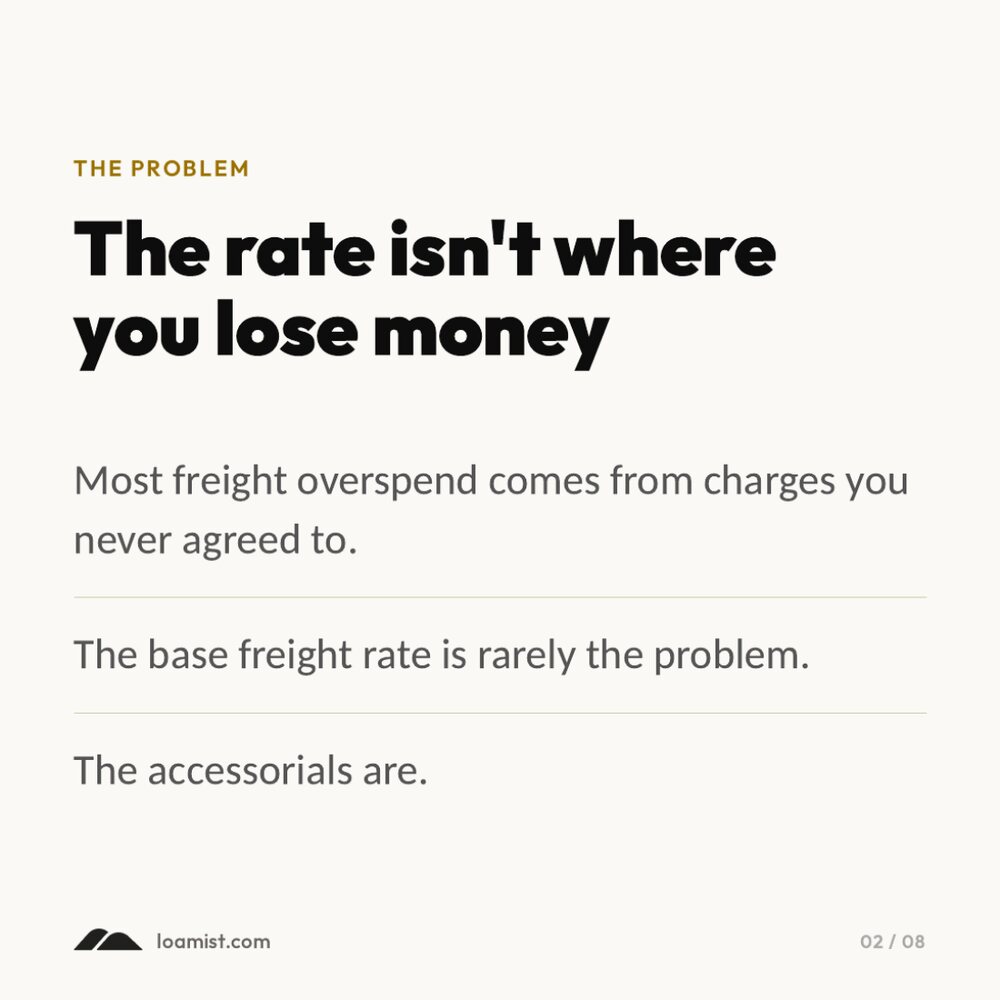
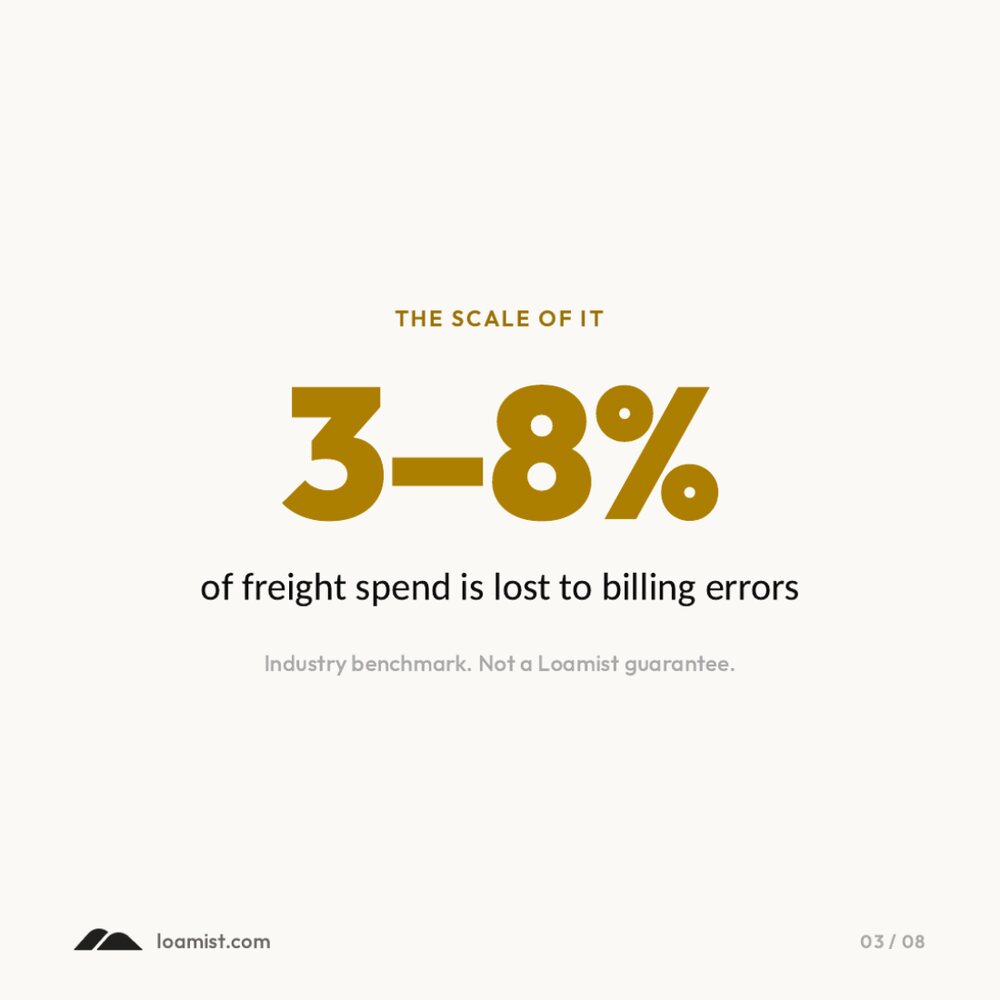
Industry benchmarks estimate that 3% to 8% of freight spend is lost to billing errors. The base freight rate is rarely where shippers lose money. The accessorials are.
The highest-error category on the invoice
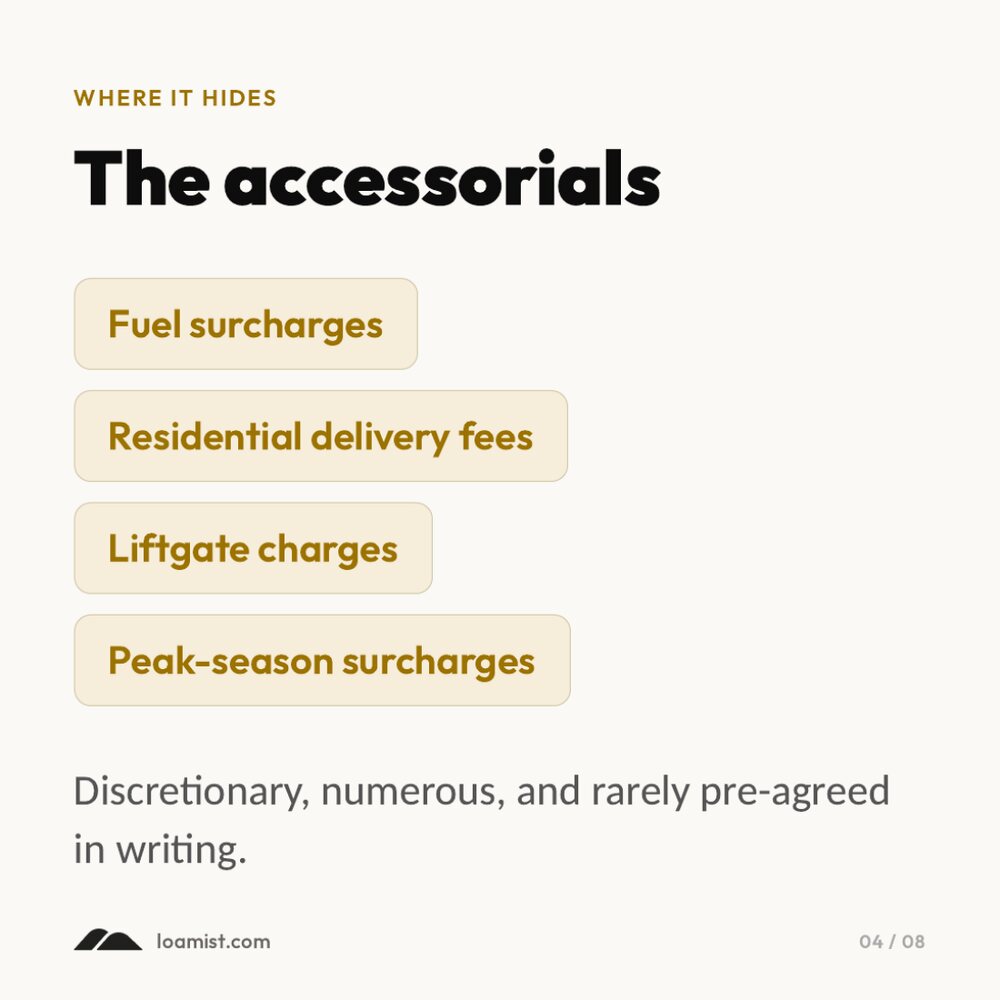
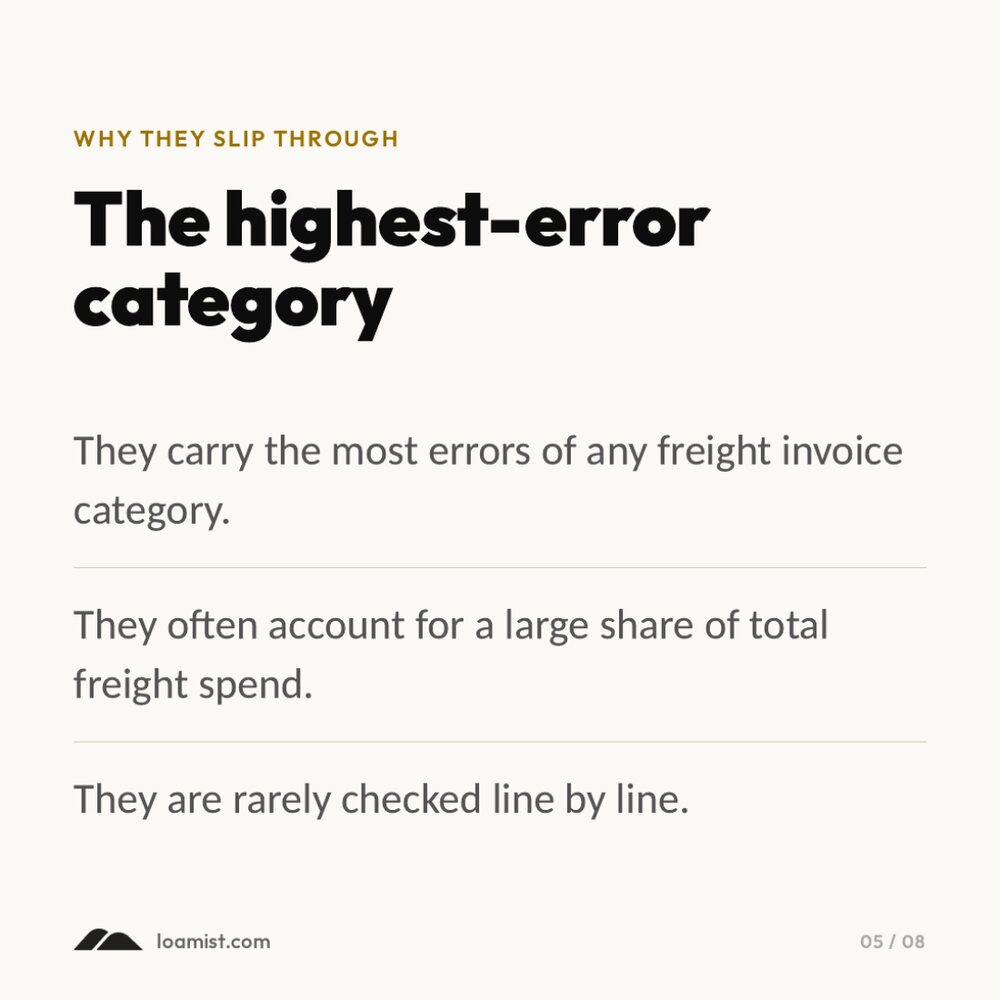
Fuel surcharges. Residential delivery fees. Liftgate charges. Peak-season surcharges. Detention and demurrage. Redelivery. They are discretionary, numerous, and rarely pre-agreed in writing. They also have the most errors of any freight invoice category, and they often account for a large share of total freight spend.
They slip through for a simple reason. A base rate is one number, negotiated once, and easy to check. Accessorials are dozens of small numbers, each applied by a carrier's billing system under its own rules, on invoices that nobody reads line by line because there are too many of them. A 6% fuel surcharge applied to a lane contracted at 4% is invisible unless someone is checking every line against the agreement.
Audit every fee against what you agreed
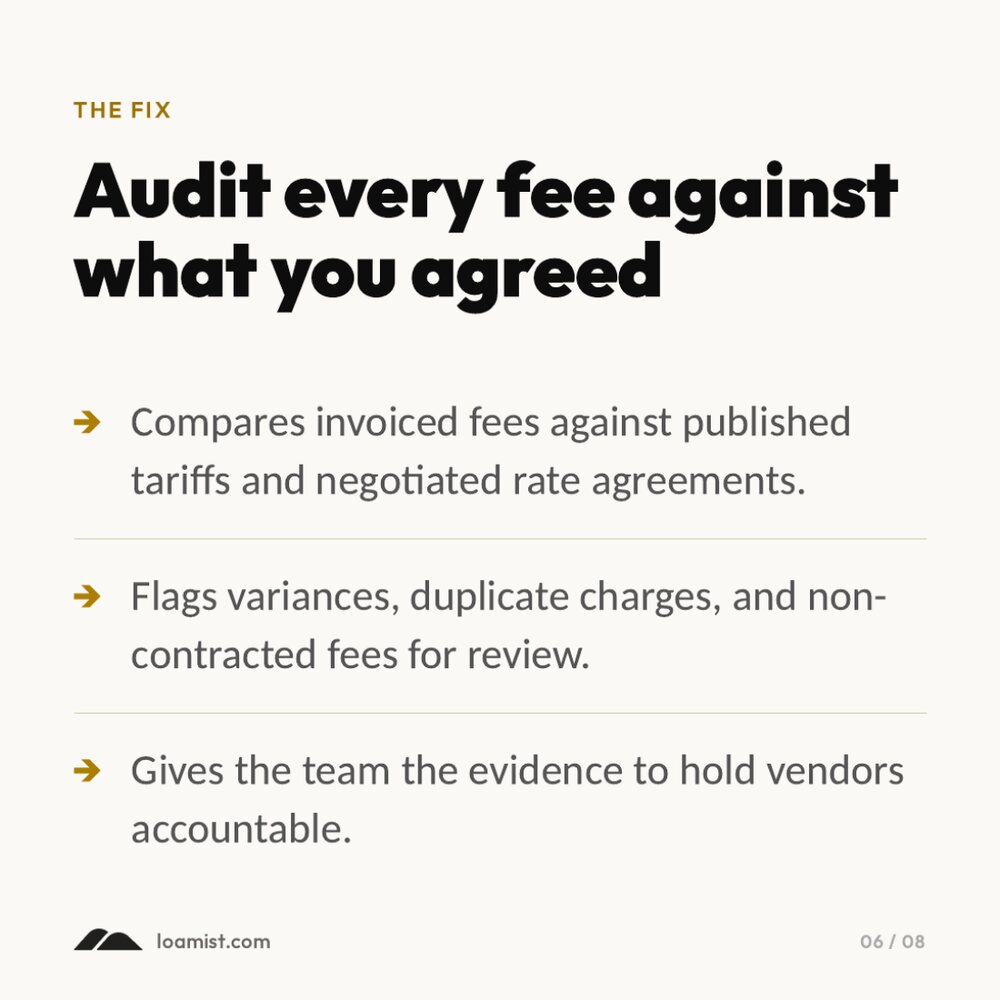
Validator audits invoiced fees against published tariffs and negotiated rate agreements. It flags variances, duplicate charges, and non-contracted fees for review. It gives the team the evidence to hold vendors accountable: the invoice line, the contracted value, and the difference, ready to attach to a dispute.
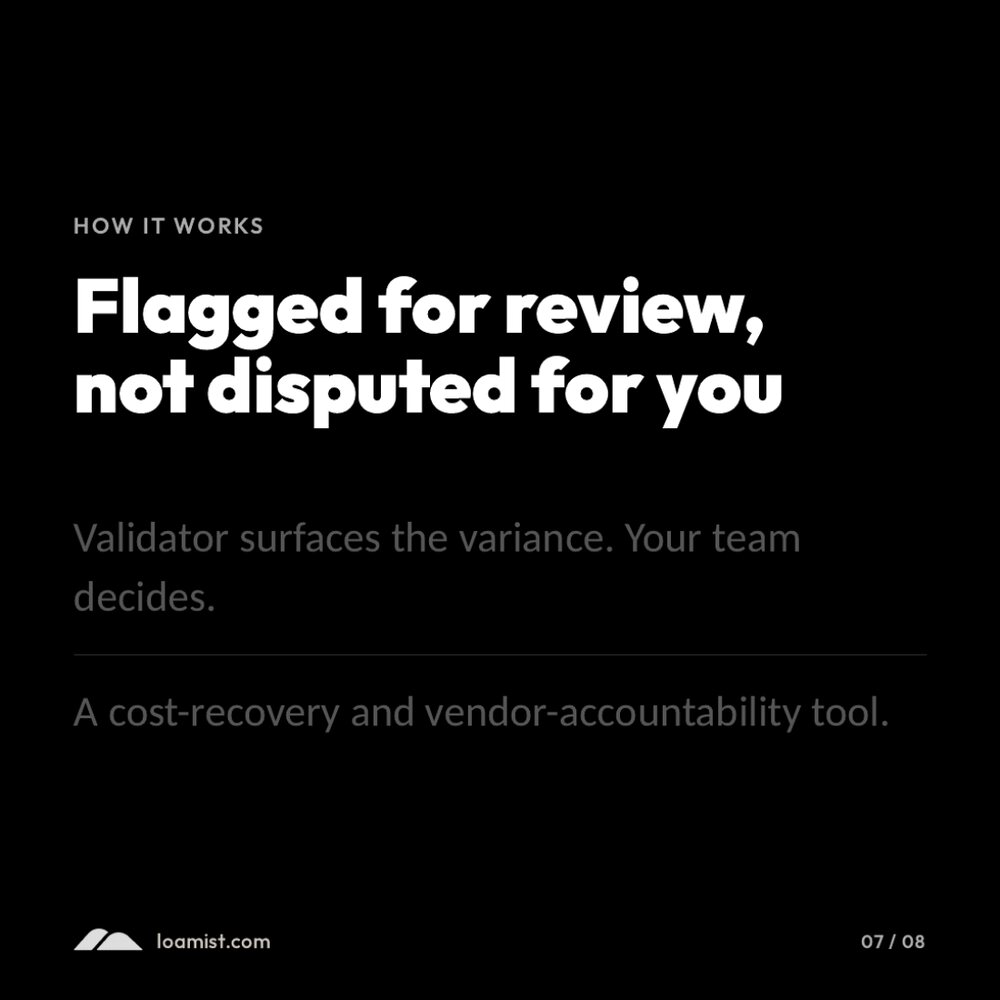
It flags for review; it does not dispute for you. Validator surfaces the variance and your team decides. It is a cost-recovery and vendor-accountability tool, not a replacement for the relationship with your carriers.
Why this belongs next to L/C examination
A freight invoice is a document set checked against an agreement, which is the same job as examining a presentation against a credit. The rate agreement plays the role of the letter of credit, the tariff plays the role of the rulebook, and the invoice lines are the fields to be compared. The skills Validator applies to a bill of lading, reading a value, normalising it and comparing it against the governing text with the source cited, transfer directly. Exporters who already run their L/C documents through Validator get the freight audit on the same platform, against the same carriers, with the same style of evidence.
The carousel
The eight slides that went with this post on LinkedIn are below. You can download the carousel as a PDF.
Key takeaways
- Leakage lives in accessorials, not the negotiated base rate.
- They are the highest-error invoice category because they are numerous, discretionary and rarely checked line by line.
- Line-level audit against the rate agreement recovers cost and gives your team evidence, while leaving the dispute decision with you.
Pull your last three freight invoices and book a demo. We will let Validator check the accessorial lines against your rate agreement.
Frequently asked questions
What are accessorial charges?
Fees added to a freight invoice on top of the base rate for extra services or conditions: fuel surcharges, residential delivery, liftgate, detention, peak-season surcharges and similar. They are often discretionary and rarely agreed line by line in advance.
How much do freight billing errors cost?
Industry benchmarks put the loss at 3% to 8% of freight spend. That is a benchmark, not a Loamist guarantee; the figure for a given shipper depends on carrier mix and how tightly accessorials are contracted.
Pull your last three freight invoices
Let Validator check the accessorial lines against your rate agreement and published tariffs. It flags variances, duplicate charges and non-contracted fees for your team to review; you decide what to dispute.
Run a free workability check on a recent L/C, or book a demo and we will walk through a live decision trace.

Nick works with exporters and trade-finance teams on letter-of-credit operations, and writes about how documentary credits fail in practice and what it takes to present clean the first time. Connect with Nick on LinkedIn, or follow Loamist for the short version of each post.